Why Your Cataract Patients Are Not Choosing Premium Lenses (And What Actually Changes That)

You offer some of the most advanced lens technology in ophthalmology. Your surgical outcomes are excellent. And yet, when patients sit down across from you, they hesitate. They say they need to think about it. Or they go with the standard lens because it is covered.

This is one of the most common frustrations we hear from cataract surgeons: patients who could benefit from a premium IOL simply don’t choose one. And too often, the instinct is to assume patients just aren’t willing to pay out of pocket.

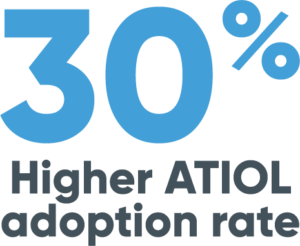
ATIOL adoption rate with Navigate

The data tells a different story. The gap between what patients could choose and what they do choose is largely an education problem. And it is one that starts long before the patient walks through your door.

Practices using Navigate’s human-led pre-visit education see a 30.5% higher ATIOL adoption rate compared to patients educated by the practice alone.


The Real Reason Patients Default to Standard Lenses

When a patient arrives at their cataract consultation unprepared, they are not in a position to make an informed decision. They may not know the difference between a monofocal and a multifocal lens. They may have heard a number thrown at them for the first time in the waiting room. They are anxious about surgery. And they are expected to choose.

That pressure leads to one predictable outcome: patients choose the path of least resistance. The standard lens is covered, they understand it, and it feels like the safe bet.

It is not a values problem. It is a timing problem. And it is not your fault for not explaining it well in the exam lane. It is structurally impossible to give a patient everything they need to feel confident in a 10-minute consultation, especially when most of that time is already committed to clinical assessment. Giving patients more time to digest the idea of a premium IOL that caters to their lifestyle increases the potential of that conversion. Even if that IOL comes with out-of-pocket costs.


What the Research Says About Patient Decision-Making

Research on how patients make healthcare decisions consistently shows that people need time to process information before they can act on it. A study on informed consent and patient decision-making found that patients who received education before their appointment were significantly more prepared to engage in shared decision-making compared to those who received information only at the point of care.

For cataract patients, this matters enormously. The decision about which lens to choose is not purely clinical. It is tied to lifestyle, expectations about vision, and a patient’s understanding of what they are actually buying. When that education happens in a rushed consultation room, under bright lights, moments before a biometry reading, it does not land.

When it happens a few days before, at home, over a relaxed phone call with a trained educator? That is a completely different conversation.


The Education Gap in Cataract Surgery

Only around 15-18% of cataract patients in the United States currently choose a premium IOL, according to industry estimates. This is despite the fact that premium lenses have never been better, and despite decades of investment in patient education materials, portal videos, and digital tools.

Digital education has its place. But it does not replace a human conversation. A video cannot answer a follow-up question. A pamphlet cannot sense that a patient is anxious about cost and pivot to address it directly. A patient portal cannot recognize that a husband and wife have different priorities about the outcome and help them work through it together. This is where human-led pre-visit education changes the outcome.


What Navigate Does Differently

Navigate Patient Solutions places trained Patient Navigators between diagnosis and consultation. After a patient books their cataract evaluation but before they arrive, a Navigator connects with them by phone, video, or text to:

  • Explain what cataract surgery is and what to expect on the day
  • Walk through the lens options the practice offers, in plain language
  • Help the patient understand what any out-of-pocket costs actually mean for their vision and lifestyle
  • Answer the questions that patients are too anxious or rushed to ask their surgeon
  • Share what they learn with the surgical team so the consultation starts from a position of trust

The Navigator doesn’t sell. They educate. And that distinction matters to both the patient and the surgeon.

In 2025, 74% of patients educated by Navigate went on to book their surgery, representing an 11% improvement over patients educated by the practice alone. And 35% chose a premium IOL!


The Exam Lane Conversation Changes

When patients arrive already educated, surgeons report that consultations shift entirely. Instead of spending the first several minutes explaining what a cataract is, surgeons can focus on what they do best: assessing the patient clinically and helping them choose the right lens for their life.

One Navigate partner practice reduced the average length of their cataract evaluations by 14 minutes. Another was able to add four additional evaluation appointments per week because of the time savings. That is not just an efficiency gain. That is more patients getting access to the care they need.

Moral Frustration Is a Real Clinical Problem

Many surgeons describe a quiet moral frustration: knowing a patient would benefit from a premium lens, but feeling powerless to change the outcome when the education gap is so wide. That frustration compounds when the same conversation happens dozens of times per week.

Pre-visit education does not just improve conversion numbers. It gives surgeons back the kind of patient relationship they went into medicine for: one where the patient is informed, engaged, and genuinely collaborative in deciding their own care.


What to Do Next

If your practice is seeing ATIOL adoption rates below 20 to 25%, the issue is almost certainly not your surgical skills or your lens selection. It is the education window before the consultation.

Navigate works as an extension of your practice, using your talking points, your lens preferences, and your brand voice. There is no disruption to your existing workflow.

To see how Navigate has performed with practices similar to yours, visit Navigate Results. Or take our free practice assessment to get an evaluation of where your current patient education process may be leaving revenue and outcomes on the table.

How Modern Ophthalmology Practices Are Educating Their Cataract Patients in 2026

The ophthalmology practices that are pulling ahead in 2026 aren’t necessarily the ones with the latest phaco technology or the most aggressive advertising budgets. They’re the ones that figured out something simpler: confident patients make better decisions, show up more reliably, and generate more revenue. The difference between a thriving ophthalmology practice and one stuck on a hamster wheel of no-shows, overworked administrators, and rushed consultations often comes down to one thing…what happens before the patient walks through the door.

In a year defined by economic headwinds, tightening reimbursements, and intensifying competition for surgical volume, forward-thinking practice owners, surgeons, and PE-backed groups are rethinking the entire pre-consultation experience. The question isn’t just “How do we perform great cataract surgery?” It’s “how do we make sure every eligible patient says yes to the best option for their life before they ever see the surgeon?”

Patients Arrive Unprepared…and That’s Expensive

We know most cataract patients have never had eye surgery before. They’ve maybe watched a YouTube video, Googled “cataract surgery recovery” at midnight, or talked to a neighbor whose experience ten years ago doesn’t really apply anymore. By the time they sit down across from your surgeon, they’re anxious and uncertain, and may be filled with misinformation or outdated information they don’t fully understand.

That confusion translates directly into practice inefficiency. Consultations run long. Staff fields the same questions on repeat. Patients delay decisions, cancel appointments, or default to the standard lens because no one explained the value of a premium option in terms that made sense to them. Research consistently shows that inadequate patient education leads to worse outcomes, lower satisfaction, and reduced practice growth.

The solution isn’t more brochures in the waiting room. It’s a real, human conversation; early, informed, and personalized.

What High-Performing Practices Are Doing Differently in 2026

The ophthalmology practices seeing the strongest ATIOL adoption rates and the smoothest clinic operations in 2026 share a common trait: they’ve pulled patient education upstream, well before the day of the consultation. Rather than asking their clinical team to squeeze education into a packed schedule, they’ve built a system where patients arrive already informed about their diagnosis, their lens options, and the lifestyle trade-offs involved.

The data backs this up. Patients who receive structured pre-consultation education from Navigate are 11% more likely to book their surgery, 30.5% more likely to choose a premium IOL, and 22% more likely to opt for a laser-assisted procedure compared to patients educated by practices alone. In a high-volume practice, those percentages translate to significant revenue impact that compounds month over month.

One Navigate partner practice reported a 25% increase in premium conversion rates and a 14-minute reduction in average cataract evaluation time for one of their busiest surgeons after just six months. Another was able to add four additional cataract evaluation appointments per week simply because patients arrived better prepared.

The Human Factor: Why Technology Alone Isn’t Enough

Patient education software has come a long way. Videos, digital intake forms, and automated SMS sequences have a real role to play. But patients facing their first cataract surgery aren’t short on information, they’re short on understanding. There’s a meaningful difference between watching a two-minute animation about intraocular lenses and having a knowledgeable human walk you through what it actually means to choose a multifocal lens if you spend three hours a day on a screen versus driving at night.

This is where Navigate Patient Solutions has built something genuinely differentiated. Navigate’s trained Patient Navigators reach out to cataract patients via phone, video, and text after a consultation is scheduled—before the appointment date. Using practice-approved talking points, they have real two-way conversations: explaining the procedure in plain language, walking through lens options the practice offers, addressing cost and insurance questions honestly, and giving patients space to ask the questions they don’t even know they have yet.

The result isn’t just a more informed patient. It’s a patient who feels seen, respected, and genuinely guided. That distinction matters enormously in an era where online reviews and word-of-mouth drive as much surgical volume as any marketing campaign.

The Operational Upside: Your Team Does More of What They’re Good At

There’s another dimension to this conversation that practice administrators and PE-backed groups understand immediately: staff leverage. We understand how ophthalmology practices are navigating persistent staffing challenges, and every minute a trained technician or counselor spends re-explaining lens options to an anxious patient is a minute not spent on clinical work that requires their expertise.

When education happens before the appointment, handled by Navigate’s dedicated team, clinical staff can do what they were actually trained to do. Technicians no longer need to be specialists in patient counseling to manage cataract evaluations effectively. Surgeons spend their limited chair time on clinical decision-making, not on first-pass explanations of what a toric lens does. And front-desk teams field fewer panicked pre-surgery phone calls or no-shows.

As one Navigate practice partner put it: “Navigate is the white-glove service we all want to deliver to our surgical patients, but don’t always have the staff or resources to manage ourselves. They do it well, consistently.”

The Business Case in 2026: Growth Without Guesswork

For practice owners and investor groups evaluating ophthalmology assets in 2026, patient education infrastructure is increasingly a signal of operational maturity and a lever for EBITDA improvement that doesn’t require new equipment or expanded facilities.

Consider the math: if a mid-size practice performs 40 cataract evaluations per week, and a structured pre-education program improves premium IOL conversion by even 10%, the revenue impact at an average out-of-pocket premium of $2,500 per eye is substantial. Layer in reduced no-shows, more efficient evaluation times, and improved patient retention, and the ROI case becomes very clear, very quickly.

Navigate’s model is designed to function as a true extension of the practice, not a bolted-on tool. Navigators learn each practice’s specific lens offerings, pricing, and surgeon preferences. They share back what they learn with the surgical team, so surgeons can walk into consultations knowing which options a patient has already considered and which concerns they still have. It’s a closed-loop system that makes the entire care team more effective.

What Educated Patients Actually Look Like

Here’s what changes when your patients arrive at their cataract evaluation prepared:

  • They can explain, in their own words, what cataract surgery does and why it matters for their quality of life.
  • They know multiple lens options exist, not just “standard” versus “premium,” but how different lenses correspond to their actual daily activities.
  • They understand out-of-pocket costs without experiencing sticker shock at the consultation. They understand how a customized solution fits their unique lifestyle.
  • They’ve had time, in an unhurried setting, to ask the questions that were keeping them up at night.
  • They arrive confident, ready to make a decision, not delay it.

Decision fatigue is a real barrier in cataract care. Patients who have already processed their options, both emotionally and practically, before they sit across from a surgeon are dramatically less likely to say “I need to think about it” and more likely to move forward with the choice that’s right for them.

The ophthalmology practices winning in 2026 aren’t the loudest on social media or the ones spending the most on paid advertising. They’re the ones delivering a consistently excellent patient experience that starts long before case day, and they’re reaping the rewards in surgical volume, premium conversions, staff morale, and patient loyalty.

Navigate Patient Solutions exists at exactly that intersection: human care, operational efficiency, and measurable business results. If your practice is looking for a scalable way to improve ATIOL adoption, reduce cancellations, and give your patients the education experience they deserve, the conversation with Navigate is worth having.


We’d love to share our insights with you. Let’s talk!


Contact - Content 2026
Would you like to sign up receive email updates from Navigate?